
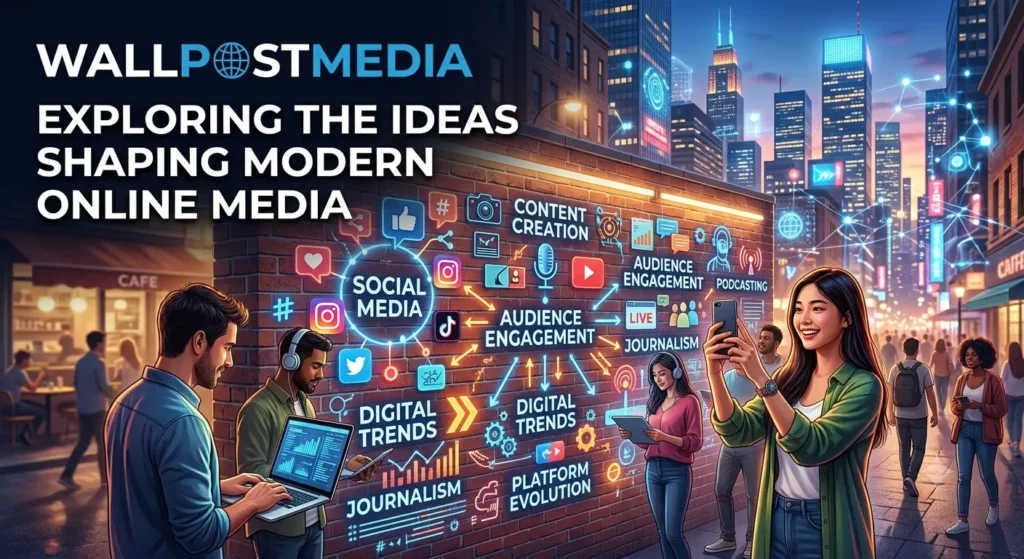
Wallpostmedia: Exploring the Ideas Shaping Modern Online Media.
Introduction
The internet has transformed the way people discover information, communicate ideas, and consume content. A person can read an article, watch a video, explore an infographic, and join an online discussion within a few minutes.
This constant flow of information has created a new environment for publishers, creators, businesses, and readers.
Wallpostmedia fits into this broader world of digital media by representing the connection between online publishing, useful content, visual communication, and audience discovery.
Modern media is no longer limited to a single format. A strong digital presence can combine written stories, images, videos, social posts, guides, and interactive experiences to reach people across different platforms.
The real challenge is not simply producing content. It is creating information that people can understand, trust, discover, and remember.
What Is Wallpostmedia?
Wallpostmedia can be viewed as a digital media and content concept focused on the way information is created, published, presented, and shared online.
It can encompass areas such as:
- Digital publishing
- Online articles
- Content marketing
- Social media
- Visual storytelling
- Video content
- Audience engagement
- Search-friendly publishing
- Online communities
The central idea is straightforward:
Digital content should provide value before it asks for attention.
Why Online Media Has Become So Important
People increasingly use the internet as a starting point for information.
They search online when they want to:
- Learn a new skill
- Understand a topic
- Compare products
- Follow current events
- Discover trends
- Find entertainment
- Solve everyday problems
- Explore new ideas
This makes digital publishing an important part of modern communication.
However, more content also means more competition for attention.
A publisher needs to provide a reason for someone to stop scrolling and start reading.
1. Understand the Audience Before Creating Content
Successful content begins with understanding the people who will consume it.
Ask:
- What does the audience already know?
- What do they want to learn?
- What problems do they face?
- What questions do they frequently ask?
- Which formats do they prefer?
For example, a beginner may prefer a simple guide, while an experienced professional may want deeper analysis.
Audience research helps determine both the subject and the presentation.
2. Give Every Story a Clear Purpose
A piece of content should have a reason for existing.
It might aim to:
- Inform
- Explain
- Educate
- Entertain
- Inspire
- Compare
- Solve a problem
- Start a conversation
When the purpose is clear, the content becomes easier to structure.
3. Make Information Easy to Navigate
Online readers rarely approach an article like a printed book.
They often scan first.
That’s why digital content benefits from:
- Short paragraphs
- Clear headings
- Bullet points
- Numbered lists
- Highlighted takeaways
- Tables
- FAQ sections
Good structure allows readers to find relevant information quickly.
Wallpostmedia and the Evolution of Publishing
Traditional publishing generally relied on newspapers, magazines, television, and radio.
Digital publishing has expanded the possibilities.
4. One Idea Can Become Multiple Formats
Consider a single topic.
It could become:
A detailed article → short video → infographic → social post → newsletter
Each format can reach a different audience.
The key is to adapt the idea instead of simply copying the same content everywhere.
5. Digital Content Can Be Interactive
Modern media can include more than static text.
Examples include:
- Polls
- Quizzes
- Interactive graphics
- Comments
- Videos
- Embedded tools
- Community discussions
Interactive formats can encourage audiences to participate rather than simply consume.
6. Publishing Speed Is Not Everything
Digital platforms make rapid publishing possible.
But publishing quickly isn’t automatically better.
Quality requires:
- Research
- Fact-checking
- Editing
- Context
- Clear presentation
A useful article published slightly later can provide more value than a rushed article filled with errors.
Wallpostmedia and Visual Communication
Visual content has become a major part of online media.
7. Images Can Make Ideas Easier to Understand
A useful image can:
- Explain a concept
- Show an example
- Break up text
- Present information
- Create emotional impact
The image should have a purpose.
Decorative visuals are fine, but informative visuals can add much greater value.
8. Infographics Simplify Complex Information
An infographic can combine:
- Numbers
- Short explanations
- Charts
- Icons
- Comparisons
This makes them useful for subjects that might otherwise require several paragraphs of explanation.
9. Video Adds Another Layer
Video can demonstrate information that is difficult to explain through text alone.
It can be particularly useful for:
- Tutorials
- Interviews
- Product demonstrations
- News explainers
- Educational content
- Behind-the-scenes stories
Wallpostmedia and Social Discovery
Social platforms have changed how people encounter content.
Instead of deliberately searching for an article, someone may discover it while scrolling.
10. Create Content Worth Sharing
People share content for different reasons.
They may find it:
- Useful
- Interesting
- Entertaining
- Surprising
- Educational
- Relatable
Content becomes more shareable when it gives people something worth passing along.
11. Build Conversations Instead of Chasing Likes
Likes are only one form of engagement.
A stronger community can develop through:
- Comments
- Discussions
- Questions
- Replies
- Shares
- User-generated content
The goal should be meaningful interaction rather than simply maximizing visible numbers.
12. Adapt Content to Each Platform
Different platforms have different user expectations.
For example:
Professional Platforms
Longer insights and industry discussions may work well.
Visual Platforms
Images, short videos, and carousels may be more appropriate.
Video Platforms
Detailed demonstrations and explainers can work well.
Websites
Long-form articles, guides, resources, and reference content can provide depth.
The same subject can be adapted accordingly.
Wallpostmedia and Search Visibility
Search remains one of the major ways people discover information.
13. Understand Search Intent
Before creating an article, identify what the reader actually wants.
A search may be:
Informational
The person wants an answer.
Commercial
The person is comparing options.
Transactional
The person is ready to take action.
Navigational
The person wants to find a particular website or resource.
Understanding intent helps determine the right type of content.
14. Put the Answer Where Readers Can Find It
If the article answers a specific question, provide the answer early.
A useful structure is:
Direct answer → Explanation → Examples → Additional information
This makes the article easier to use.
15. Use Keywords Naturally
Search optimization can help content become discoverable.
However, repeating the same keyword excessively can make writing awkward.
Use important terms naturally in:
- Title
- Introduction
- Headings
- Body
- Meta description
- URL
The priority should always be useful content.
Wallpostmedia and AI Search
The way people discover information is evolving again.
AI-powered tools increasingly help users find answers and summarize information.
This creates new opportunities for well-structured content.
16. Use Clear Definitions
When introducing a topic, explain it directly.
For example:
What is Wallpostmedia?
Follow the question with a concise definition.
This creates a clear foundation before moving into detailed discussion.
17. Organize Information Around Questions
Question-based sections can make content easier to understand.
Useful formats include:
- What is it?
- Why does it matter?
- How does it work?
- Who can benefit?
- What are the advantages?
- What mistakes should be avoided?
This structure is useful for both readers and information-discovery systems.
18. Give Context, Not Just Facts
A fact by itself may not be enough.
Readers often want to know:
- Why does this matter?
- What caused it?
- Who is affected?
- What could happen next?
- How can someone use this information?
Context turns isolated information into a useful story.
Building Trust Through Digital Publishing
Online audiences have access to more information than ever.
That makes credibility increasingly important.
19. Verify Important Information
Before publishing factual claims, check them carefully.
This is especially important for:
- Statistics
- Financial information
- Health-related subjects
- Product specifications
- Technical claims
- Current events
Accuracy should always come before speed.
20. Separate Facts From Opinions
Readers should be able to understand whether they are reading:
- News
- Analysis
- Opinion
- Commentary
- Educational content
- Promotional material
Clear labeling improves transparency.
21. Keep Content Current
Some subjects change quickly.
Technology, social platforms, business trends, and digital tools may become outdated within months—or even weeks.
Review important content regularly and update information when needed.
Wallpostmedia and Content Repurposing
Creating quality content takes effort.
Repurposing allows one strong idea to work harder.
22. Turn One Article Into a Content Series
A detailed article can produce:
- Five social posts
- One infographic
- A short video
- An email newsletter
- A discussion topic
- A visual carousel
This creates a connected content ecosystem.
23. Build Topic Clusters
Instead of publishing unrelated articles, create groups of connected content.
For example:
Digital Marketing
- SEO basics
- Content marketing
- Social media
- Email marketing
- Paid advertising
- Analytics
Readers can then move from one related resource to another.
24. Balance Evergreen and Trending Content
Both types have different advantages.
Evergreen Content
Examples:
- Tutorials
- Guides
- Definitions
- How-to articles
These can remain useful for years.
Trending Content
Examples:
- New technology
- Industry developments
- Platform updates
- Current events
These can generate timely interest.
A balanced strategy can benefit from both.
A Practical Wallpostmedia Content Workflow
Creating content becomes easier with a repeatable system.
Step 1: Research
Understand the audience and topic.
Step 2: Identify the Question
Determine what readers actually want to know.
Step 3: Choose the Format
Decide whether the idea works best as an article, video, graphic, post, or another format.
Step 4: Create an Outline
Organize the major points.
Step 5: Produce
Write, record, design, or develop the content.
Step 6: Edit
Check grammar, clarity, structure, and accuracy.
Step 7: Optimize
Improve titles, headings, metadata, visuals, and internal connections.
Step 8: Publish
Place the content on the most appropriate platform.
Step 9: Promote
Distribute it through relevant channels.
Step 10: Review
Use performance data to improve future content.
Important Content Metrics
Traffic is useful, but it isn’t the only measure of success.
| Metric | What It Indicates |
|---|---|
| Impressions | Potential reach |
| Clicks | Initial interest |
| Engagement time | Attention |
| Shares | Perceived usefulness |
| Comments | Conversation |
| Returning visitors | Continued interest |
| Conversions | Business outcomes |
The right metrics depend on the purpose of the content.
Common Digital Media Mistakes
Publishing without a clear audience
A topic can be interesting without being relevant.
Using misleading headlines
Clicks gained through inaccurate expectations can hurt trust.
Overusing keywords
Search optimization shouldn’t damage readability.
Ignoring visuals
Some ideas are easier to understand visually.
Publishing without editing
Errors can reduce credibility.
Forgetting older content
Outdated information can become misleading.
Trying to use every platform
It is usually better to maintain a few channels well than spread resources too thinly.
10 Wallpostmedia Principles
- Know the audience.
- Choose topics with genuine value.
- Give every piece a clear purpose.
- Make content easy to scan.
- Answer questions directly.
- Use visuals strategically.
- Adapt content to different platforms.
- Prioritize accuracy and transparency.
- Repurpose strong ideas.
- Use audience feedback to improve.
Frequently Asked Questions
What is Wallpostmedia?
Wallpostmedia can be understood as a digital media concept centered on online publishing, content creation, visual communication, and audience engagement.
What types of content can Wallpostmedia include?
Articles, guides, videos, infographics, newsletters, social media posts, podcasts, and other digital formats can all be part of a broader online media strategy.
Why is audience research important for digital content?
Audience research helps creators understand what people want, what questions they ask, and how they prefer to consume information.
How can digital content become more useful?
Start with a real audience need, answer the main question clearly, provide supporting context, and use an appropriate format.
Is SEO important for online publishing?
SEO can help people discover useful content through search engines, but optimization should support readability rather than overwhelm it.
How often should digital content be updated?
Important content should be reviewed whenever information changes. Fast-moving topics may require more frequent updates than evergreen subjects.
Conclusion
Wallpostmedia represents the changing landscape of online communication, where written content, visuals, video, search, and social platforms increasingly work together.
Creating digital content is easier than ever.
Creating valuable digital content is much harder.
The strongest approach begins with understanding the audience and identifying what they genuinely need. From there, creators can develop useful stories, present them clearly, distribute them effectively, and improve them based on real audience feedback.
Digital media will continue to evolve as new technologies and platforms emerge.
But one principle is unlikely to change:
People will always value content that helps them understand something, solve a problem, discover an idea, or see the world from a new perspective.